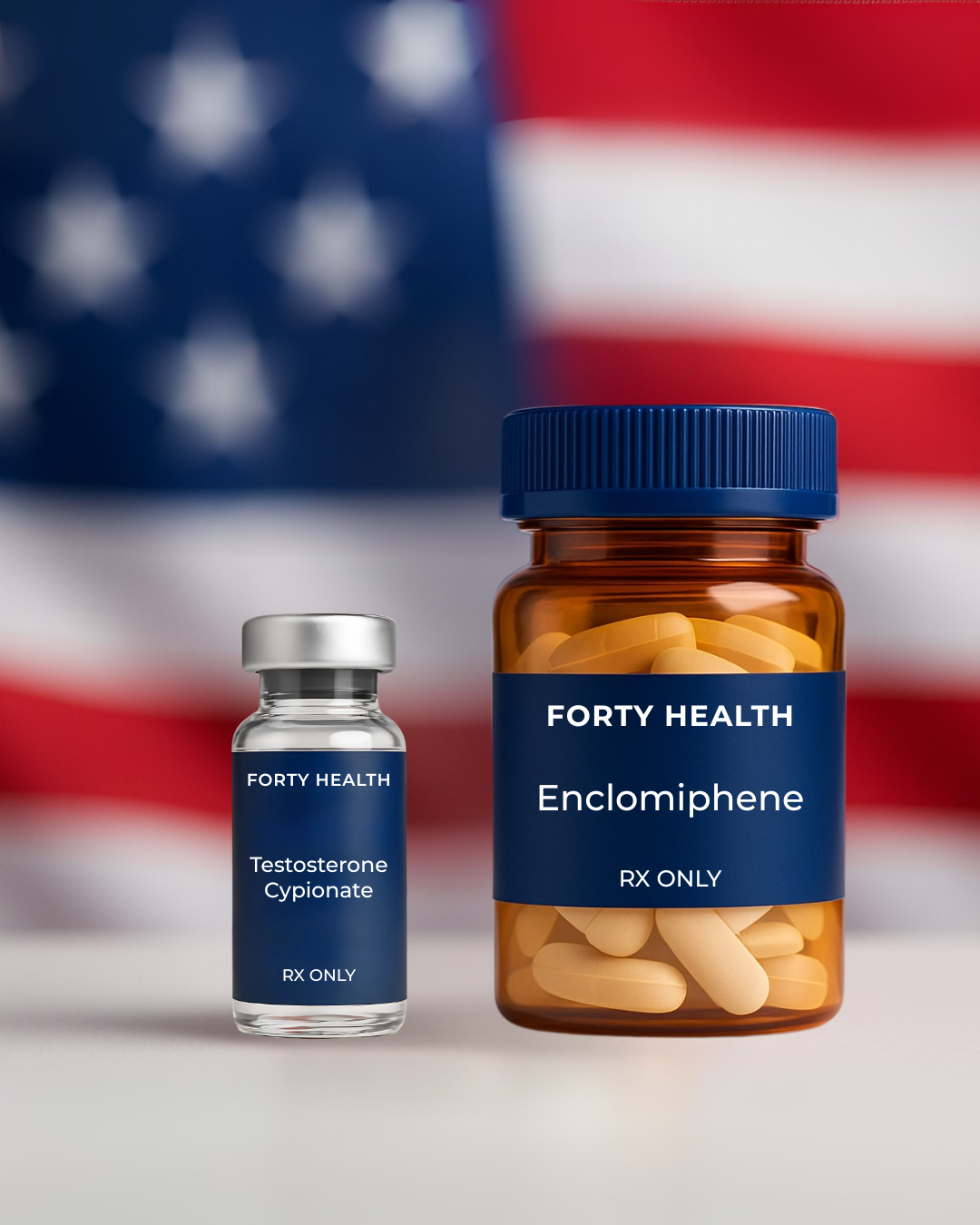

🚨Podcast Release alert: Dr. Valiuddin featured on American Masculinity — "How To Fix Low Testosterone The Right Way"
BLUF (Bottom Line Up Front): Dr. Hisham Valiuddin breaks down the growing testosterone crisis, why traditional medicine may be behind, and the critical conversations many clinics aren’t having - including fertility risks, misleading “normal” ranges, and how to identify trustworthy care. From warning signs like low energy and weight gain to the surprising connection between erectile dysfunction and heart health, this discussion reveals what every man should know about optimizing hormones, protecting long-term health, and taking control before problems escalate. — already found helpful by over 15,000 men seeking answers about hormone health and performance.
Below is the full transcript from this important conversation
◆ The Epidemic Nobody Is Talking About
Tim Wienecke: Thanks for coming on, man. I’m really excited to have the conversation with you.
Dr. Valiuddin: Yeah, happy to be here. It’s an important subject that deserves attention. Love to talk about it.
Tim Wienecke: Yeah, it’s been really interesting just in my practice around testosterone and what’s been coming up. I think this is a pretty broad issue and there’s a lot of bad actors taking advantage of guys’ fears, so I’m really glad there are guys like you in the space to give some clarity to this.
Dr. Valiuddin: Oh, absolutely. It’s at epidemic levels. Testosterone levels have been lower than ever in the history of testosterone level testing. It’s a very important subject, and I’m glad that there are clinicians that are starting to pick up on it, diagnose it, and start to treat it.
Tim Wienecke: So how does a guy go—you’re an ER doc, right? You’re already helping people. I imagine that’s fulfilling, helping people on the worst day of their life. How do you go from that to engaging in hormone medicine?
Dr. Valiuddin: We do a personalized concierge care, and I’m also a lifestyle physician. Working in the ER is definitely a satisfying and fulfilling experience—it aligns with my life ambitions and passions for helping people in their most vulnerable moments. Over years of practicing, I saw firsthand how many men let their health fall apart even before coming to the emergency department. Usually when you have an emergency, it’s been building up for years. It’s people with chronic conditions that were left unaddressed.
◆ Tim's Personal Story: What the Clinics Don't Tell You
Tim Wienecke: That was great and it kind of hit my masculinity pretty close to home, right? It feels like you’re less than for a minute. Getting on testosterone absolutely turned all that around—all the things that I know work started working again. But there were also some real health issues that no one told me about, or I was so worried about what was happening that I didn’t pay attention. Later on, when me and my now ex-wife tried to have kids, I was unable to conceive. And I’m pretty sure—and so is my urologist—that part of that was because of being on synthetic testosterone for so long. I don’t think a lot of guys going into these clinics are told that. And I don’t want anybody else to go through what I did. So, what are the common red flags you’re seeing as a professional that guys should be watching for?
Dr. Valiuddin: The story you shared is not uncommon these days, but everyone’s afraid to talk about it because of a long-standing kind of culture. I’ll bring the historic perspective to this and then talk about where we’re at today. And you’re 100% right.
◆ The Normal Range Problem: Medicine 10 Years Behind
Tim Wienecke: When I first went in and advocated to get the test, my GP said I was ‘average within the average for my age,’ not acknowledging that the average has shifted over the last 20 years to detrimental levels. Is the general medical industry still going off testosterone averages of guys today versus our natural state of healthy testosterone?
Dr. Valiuddin: Medical evidence is usually 10 years behind actual state-of-the-art research. That’s just how medicine is practiced at large. It takes that long to do research, conduct randomized control trials, build multiple levels of evidence, get it published, into textbooks, and then teach the next class of medical students who graduate four years later. Medicine and education are some of the slowest industries to change their practices. The normal range for testosterone at most labs is between 200 to 1,200. That’s a very broad range, and it’s not age-adjusted—that’s the biggest problem. Most other tests now have age-associated normals, like cardiac enzymes. But for testosterone, that sophistication hasn’t been applied. So if you go to any primary care physician and your level is between 200 and 1,200, they’ll say you’re within the normal range.
Tim Wienecke: I can say that when it was down around the 200s, it was not normal. That felt awful. The belly, the weight gain, the energy level—it was very clear. I couldn’t recover from minor hurts. Bruising took longer to heal. I felt all of a sudden very old. The masculinity conversation and having some kind of metric for it has been really important and informed a lot of the work I’m doing here on the podcast.
◆ Red Flags: How to Spot Bad Actors
Tim Wienecke: Let’s say a guy gets the test and they’re like, ‘Okay, I need some kind of treatment for this.’ I use a medication instead of testosterone itself, which works really well for me. What should guys be watching for? Because I see a lot of really predatory actors in these health clinics.
Dr. Valiuddin: Testosterone is an FDA-regulated substance—you have to have a prescription for it. So if anybody is selling you synthetic testosterone or any sort of testosterone supplement that isn’t FDA-approved or doesn’t require a prescription, those are bad actors. It’s illegal, and there have been multiple FDA arrests and busts in this space for people importing from China and selling online or in gyms. If someone ‘knows a guy who knows a guy,’ run. Don’t even walk away—run.
Tim Wienecke: It feels very akin to what I used to think of as steroid culture.
Dr. Valiuddin: That’s right. Anabolic steroids—some people use synthetic testosterone as a supplement for anabolic muscle growth, which is one of the benefits of testosterone, but that’s exactly how anabolic steroids used to be discussed. Tren and oxandrolone come up frequently in the bodybuilding world. We don’t recommend those, and if anyone starts there as their ‘testosterone treatment,’ run.
Tim Wienecke: The clinic I went to had a nurse practitioner and they seemed very willy-nilly in their prescription. I was supposed to get a small pellet, but they put in a larger one on accident, and there wasn’t a real conversation about that. All of a sudden I was angry. All of a sudden I had different physiological symptoms. And that was just from a mistake, because they said ‘Well, you got more—isn’t that good?’
Dr. Valiuddin: One major red flag is the marketing messaging. If somebody is marketing testosterone as a product rather than addressing the condition they’re trying to treat, I would take a second look. A reputable provider should have a real conversation with you about your symptoms, your goals, your medical history, and how your lifestyle fits in. The questions they ask you should tell you a lot about whether they’re giving you a real evaluation.
◆ The Fertility Conversation Nobody Is Having
Tim Wienecke: I think it’s also really interesting that they don’t have a conversation with guys around what their goals for the future are. For a layman—and I was certainly surprised by this—you’d assume that if you get higher testosterone, you’re more virile, meaning you can probably produce more children. In fact, the opposite is true. Can you speak to that?
Dr. Valiuddin: Absolutely. This is the biggest thing left out when testosterone is prescribed from a non-reputable source. When you have synthetic testosterone, one of the biggest side effects is testicular shrinkage, because your body interprets that there’s already enough testosterone and stops producing it naturally—including the production of sperm. So while testosterone can improve many quality-of-life symptoms, it can simultaneously reduce or eliminate your ability to father children. This conversation is often completely absent from quick-prescribe clinics.
Tim Wienecke: So many guys going in for testosterone are older, and the assumption isn’t that they’re worried about fertility. But there are also younger guys getting into these clinics and no one’s telling them.
◆ Navigating the Healthcare System: Tools for Advocacy
Tim Wienecke: What should a guy ask that’s going to cue the doctor that he’s done his homework and is serious? And what if their doctor rolls their eyes?
Dr. Valiuddin: If your primary care doctor gives you a hard time about being concerned about your health, you probably need another doctor. But I understand most guys don’t have a lot of options. They’re on the insurance they have, and getting a new provider can take six to nine months. One thing you can do is bring up the TRAVERSE trial—spelled T-R-A-V-E-R-S-E. This trial changed the whole paradigm on testosterone health. There used to be a black-box warning on testosterone saying it could increase cardiac risk. The TRAVERSE trial led the FDA to remove that black-box warning in 2024. If you mention it by name, the doctor will know you’ve done real research and will take you much more seriously.
Tim Wienecke: I love that. Having that medical evidence in your pocket is so important. And that five-year stigma—the delay before men even bring this up—is just so consistent in my practice. That’s why I tell my own story: I want to normalize it. It’s an epidemic problem right now, and middle-aged men in this country are suffering with this.
Dr. Valiuddin: Exactly. And two big reasons men wait: many primary care physicians are female, and men feel more vulnerable bringing up bedroom issues in that setting. And sometimes their wife is also a patient of the same doctor, or a community member. So there’s about four to five years before men even broach the subject. That’s exactly why we have a discrete, private concierge approach to get these conditions addressed.
Tim Wienecke: I can tell you there are wonderful female doctors that are absolutely informed and will help you if you open the door for them to do so. Take your health seriously. And the penis’s health is the canary in the coal mine. One urologist I follow framed it beautifully: within five years of having ED, a heart attack usually occurs. That’s why this has to be treated as a complete health focus.
Dr. Valiuddin: I like to call it the tip of the spear. Your arteries are smallest when they reach that organ, and the second place where they get similarly small is your heart. So erectile dysfunction can be signaling a clotting disorder, atherosclerotic disease, or coronary artery disease. It’s not just about sexual health—it’s a systemic warning sign.
◆ What You Can Control: Lifestyle Factors
Tim Wienecke: One of the things I’ve heard is not having your cell phone in your front pocket because of the heat and potentially the Bluetooth. Is that real?
Dr. Valiuddin: It’s tough to say—I’ve heard both sides of the argument. I like to speak from a place of research and practice, and there simply hasn’t been enough funding to crack the code on it. Big pharma doesn’t benefit from testing it. So the jury’s still out.
Tim Wienecke: So maybe just keep it in the back pocket for now?
Dr. Valiuddin: Or in the car if you can. Getting away from your phone isn’t going to do you any harm.
Tim Wienecke: So many young guys right now are checking out and not pursuing sexual relationships. One in four guys from ages 20 to 30 are not seeking sexual relationships. What’s the long-term impact of that kind of celibacy, and movements advocating for full celibacy and no masturbation—how is that impacting testosterone and sexual health?
Dr. Valiuddin: Your body is naturally programmed to function in certain ways, and going against that causes issues. We have content on our website that actually addresses what ‘No-Fap November’ does to testosterone levels. There’s an old trope from boxing and sports films—the coach telling Rocky to stay away from his wife before the fight to keep his aggression up. The science on it is nuanced. What I will say is: if you’re not having morning erections when you wake up, that’s a physiological sign that something may be wrong with your pudendal arteries. That’s the ‘canary in the coal mine’ moment. Get your testosterone level checked.
Tim Wienecke: The urologist I mentioned had a video saying the average healthy guy has seven erections through the course of a night of sleep—and that part of that is that blood flow is literally how the body cleans and heals that organ. Is that accurate?
Dr. Valiuddin: Yes. There’s actually something they used to do back in the day called the ‘postage stamp test.’ You take a roll of postage stamps, wrap them around your penis before sleeping, and check in the morning whether the roll expanded—meaning the stamps separated. That tells you whether you’re having nocturnal erections without needing any clinical equipment. It sounds funny, but it’s a real diagnostic tool.
Tim Wienecke: I just want to be a fly on the wall listening to the clinician conducting that study… [laughter] So now you know, right? We’ve got a thing.
◆ Breaking the Silence: The Case for Speaking Up
Tim Wienecke: I imagine the stigma we’re poking fun at is landing hard on a lot of guys listening. What would you say to the guys who aren’t getting this looked at because they’re scared to know?
Dr. Valiuddin: Your health is what’s going to empower you. Nobody owes you anything except yourself. People ask ten questions before they buy a laptop or a car—what kind of engine, how much horsepower, when to get an oil change. Ask the same questions about your body. This is the actual vehicle you run every single day. Before YouTube and search engines, the only way to get this information was fifteen minutes with your GP once a year. Now you have access to so much more. Use ChatGPT, look it up, watch videos, then walk into that clinical conversation empowered. And always feel free to get a second opinion.
Tim Wienecke: As knowledge expands, it’s getting harder and harder for GPs to catch everything. Getting that second opinion is so important just to make sure you’ve got your bases covered.
Dr. Valiuddin: Exactly. At Forty Health, people can just send us their lab work and say, ‘Hey, can I talk to someone?’ Our concierge physicians will review it and either say ‘you’re fine’ or help guide your care from there. You’re not alone. There’s a reason testosterone deficiency is at epidemic levels—it’s because a whole generation stayed silent. When you do speak up, you’re not just potentially saving your own life. You might be saving the next guy’s life too.
Tim Wienecke: I also think women can kind of lead the way a little bit here. Women have had to really advocate against the medical system to get their needs seen and met for generations. A lot of how we’ve learned to self-advocate comes from what women have gone through. That’s the cost of patriarchy—their gendered health has suffered, and now that we’re coming around, we’re seeing what the lack of gendered information has cost all of us. Anytime you’re addressing a struggle within these systems, you’re helping all of us. Step up where you can, guys. I know it’s scary. I don’t particularly love telling the world that my testosterone was low. But hopefully it helps some of you get the testing you need.
Dr. Valiuddin: Absolutely. And one more reason: birth rates in the United States are the lowest they’ve ever been. This is going to have impacts for centuries. If doing it for your own life isn’t motivation enough, and doing it for your neighbor isn’t enough—do it for the generations a hundred years down the road who might suffer because we didn’t speak up when it was our turn.
◆ Getting Personal: Masculinity, Identity & Growth
At the close of every episode, Tim asks his guests three personal questions about their experience with masculinity.
Tim Wienecke: What’s a rule about masculinity you learned before you were 12 that’s remained true today?
Dr. Valiuddin: One of the rules I learned about masculinity when I was young was that a man shows up—not just physically, but with his full presence and accountability. That one has stayed true.
Tim Wienecke: Tell us about a time where pursuing manhood hurt you.
Dr. Valiuddin: I always felt the pressure to have the answers—to be the decision-maker, the fixer, the rock for everyone else. I internalized that idea that asking questions or slowing down was weakness. But it actually led to less efficiency, because physically, mentally, and emotionally, when you’re chasing a particular version of yourself, it adds undue pressure. You don’t move as fast. It’s not just about getting to the destination—you’re trying to control the perception of things. But it’s okay to not have the answer. As a doctor, you always feel you should have an answer. But the most honest thing you can say sometimes is ‘I don’t know’—and that’s okay.
Tim Wienecke: Almost every provider I’ve talked to has had some kind of experience with the pressure to have an answer and that being intrinsically tied to being a man. People can see you fix ignorance. They can’t see you fix bluster and ego.
Dr. Valiuddin: That’s a great way to put it.
Tim Wienecke: Tell us about a time when the pursuit of your manhood empowered you.
Dr. Valiuddin: It comes down to the reason for this podcast episode, really. When I started focusing on optimizing my health—not just what my perception of true health was, but actually taking control of my body, my outcomes, my long-term planning around energy, mental resilience, and leadership—that empowered me. To say: this is my health, I’m going to keep it on a certain line, and pursue my goals. That gave me ultimate confidence to say I can change things, not just for myself, but rather me dictating the way my life is conducted.
Tim Wienecke: So by leaning into your own efficacy and what you can do for yourself, life got better.
Dr. Valiuddin: Game changer.
CLOSING
Dr. Valiuddin: Make sure you pay attention to what your body’s telling you. If you’re worried about it, go to fortyhealth.com. Browse the website, check out the blogs. We have board-certified physicians on our team who are happy to talk to you. And if anybody wants to shoot me an email after listening to this, I’m happy to answer some questions as well.
Tim Wienecke: That’s really kind of you. I’ll make sure to put that in the show notes so guys can get those questions to you. And that’s our conversation with Dr. Valiuddin. At the beginning of the episode, I asked how you’re handling your hormone health. What’s changing for you now that you’ve listened to this episode? Leave it in the comments so we can normalize men changing their minds with new information. As always, we like to fact-check here. The TRAVERSE trial absolutely changed how the FDA regulates testosterone. But as the good doctor kept reminding us, a complete picture of your health is required for competent hormone care. Go to a provider that cares about that—not somebody who’s going to give you a single blood test and put you on a hormone right away. I’m Tim Wienecke. This is American Masculinity. Thank you so much for listening.
American Masculinity Podcast • Episode 28
Watch the full episode on YouTube
Disclaimer: This transcript is for informational purposes only and does not constitute medical advice. Consult a qualified healthcare provider for personalized guidance.